

After undergoing rhinoplasty, proper taping can promote a more defined and well-contoured nasal structure by applying gentle pressure to the areas that are most prone to swelling, such as the nasal tip and sidewalls.
If your surgeon has instructed you to tape your nose post-surgery, it’s important to follow their guidance closely to achieve the best results. Taping helps to stabilize the nasal tissues, particularly in the delicate early stages of healing when the skin is still adjusting to its new form.
In this guide, we’ll walk you through each step of the taping process to help you achieve a smoother, faster recovery after your rhinoplasty.
Whether you’re a first-time patient or need a refresher, following these steps carefully will help you maintain the integrity of your results and reduce complications during your healing journey.
Step By Step Guide For Taping Nose After Rhinoplasty
If you’ve been instructed to tape your nose after rhinoplasty, following these steps carefully will help ensure the best results. Remember to always follow your surgeon’s specific instructions, as they may have personalized recommendations based on your surgery.
Step 1: Gather Your Supplies
Before starting, make sure you have all the necessary materials:
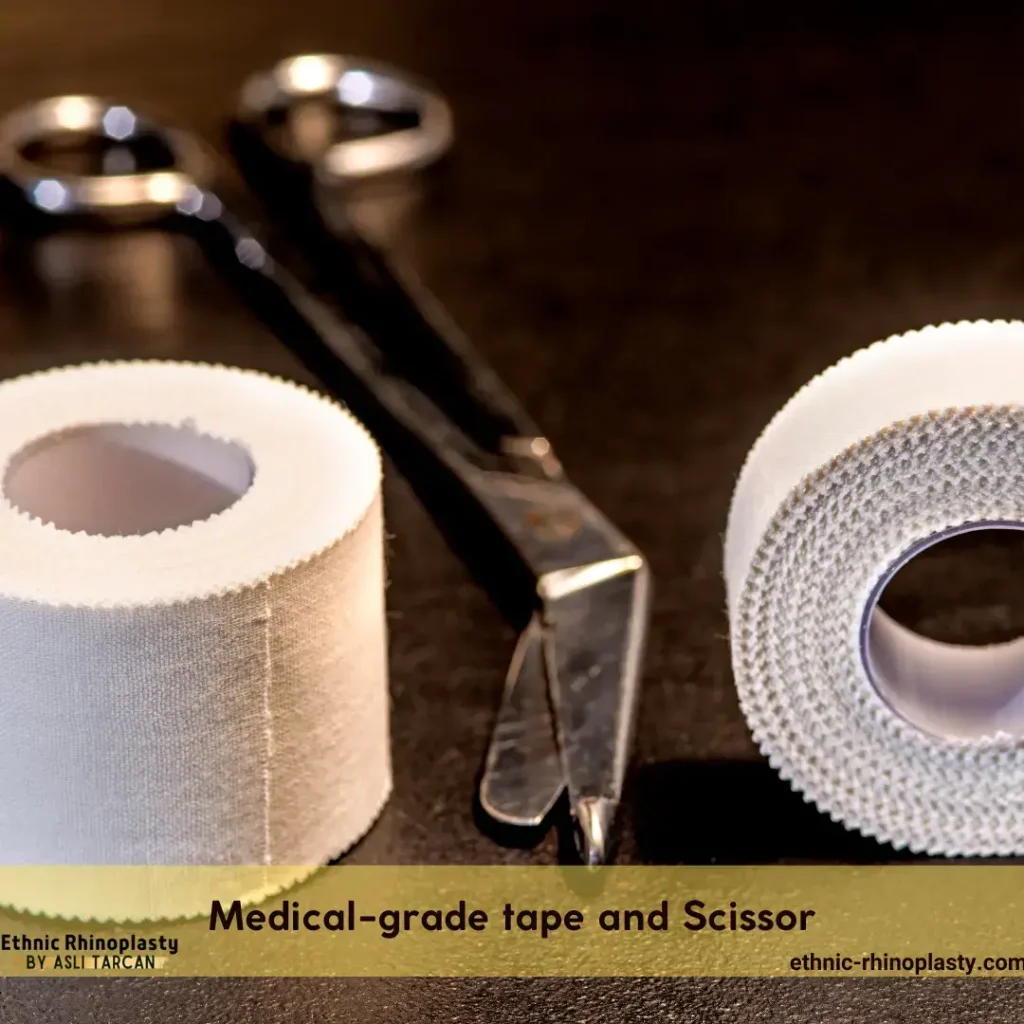
- Medical-grade tape: Typically, Micro 4/3 M tan tape or another type of medical paper tape is recommended by surgeons for its gentle adhesion and flexibility.
- Scissors: For cutting the tape into smaller strips.
- Clean hands: Always wash your hands thoroughly before touching your face to avoid introducing bacteria.
- Mirror: A well-lit mirror will help you apply the tape precisely.
Step 2: Prepare Your Nose
Once you have your supplies ready, begin by preparing your nose for the taping process:
- Clean your face: Gently wash your face with a mild, non-irritating cleanser and pat it dry with a soft towel.
- Examine your nose: Check for any swelling or signs of infection. If you notice any unusual symptoms, consult your surgeon before proceeding.
Step 3: Apply the First Tape Strip to Lift the Nasal Tip
The first step in taping your nose is to support the nasal tip, which often experiences the most swelling after surgery.
- Cut a strip of tape: Start with a small, thin strip of medical tape (about 2 inches long).
- Lift the nasal tip: Using your fingers, gently lift the tip of your nose upward, just above the incision site.
- Apply the tape: Place the tape just above the incision line, running it across the sides of the nose. Squeeze the tape firmly to ensure it adheres well to the nasal skin. Press gently to lift and stabilize the tip in its new position.
- Reinforce the tape: If necessary, apply another strip to reinforce the first one. Make sure the tape is tightly pressed to prevent any movement of the nasal tip.
Step 4: Tape the Super Tip Area (Above the Nasal Tip)
Next, you’ll focus on the super tip area, which is the region just above the tip of the nose. This area tends to swell as well, and taping helps reduce the edema.
- Cut a second strip of tape: Again, use a small strip of tape (around 2 inches long).
- Apply the tape to the super tip: Place the tape just above the tip of the nose, applying gentle downward pressure. This will help reduce swelling in this area.
- Press and hold: After applying the tape, use your fingers to press and hold the tape in place, ensuring it adheres well and maintains pressure on the super tip area.
Step 5: Secure the Sidewalls of the Nose
To further stabilize your nose and prevent any shifting, apply tape to the sidewalls:
- Cut additional strips of tape: Use smaller strips (about 2 inches long) for the sides of your nose.
- Apply the tape along the sides of the nose: Starting from the top of the bridge, apply the tape along the sidewalls, gently pulling the skin towards the sides of the face. This will help shape the nasal structure and prevent swelling from accumulating on the sides.
- Press down each strip: Each strip should be pressed firmly into place, ensuring a secure hold.
Step 6: Final Check and Adjustments
Once all the tape strips are in place, take a moment to ensure that:
- The tape is applied firmly, without being too tight or uncomfortable.
- The nasal tip is lifted and stabilized in its desired position.
- The super tip area is compressed to reduce swelling.
- The sidewalls are supported to prevent shifting.
If any tape feels loose or doesn’t seem to be holding well, don’t hesitate to add extra strips or adjust the existing ones for a better fit.
Step 7: Sleeping and Daily Care
Once the tape is securely applied, you can continue with your daily routine:
- Sleep with the tape on: Most surgeons recommend that you wear the tape overnight to provide continuous support while you sleep.
- Shower carefully: When you shower, the tape may loosen slightly. Gently pat the tape dry after your shower to maintain its adhesion.
- Avoid touching the tape: Refrain from touching or adjusting the tape frequently, as this can cause irritation or disrupt its effectiveness.
Step 8: Remove the Tape
After the recommended period, your surgeon will guide you on how and when to remove the tape. Generally, this is done in stages as your nose heals:
- Peel gently: When removing the tape, do so gently to avoid irritating the skin.
- Follow up with your surgeon: Your surgeon may also remove the tape during follow-up visits to ensure the healing process is progressing smoothly.